Dark tea 黑茶
The only type of tea changed by microorganisms. It is pressed, aged for years and brewed with water at a full boil.
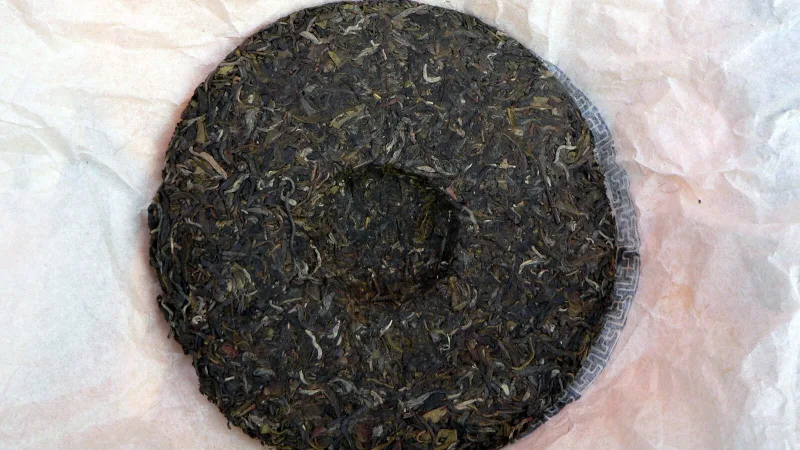

- Fermentation:
- microbial: in the wet pile and during aging
- Key step:
- wo dui, wet piling
- Main provinces:
- Yunnan, Hunan, Guangxi, Sichuan
- Form:
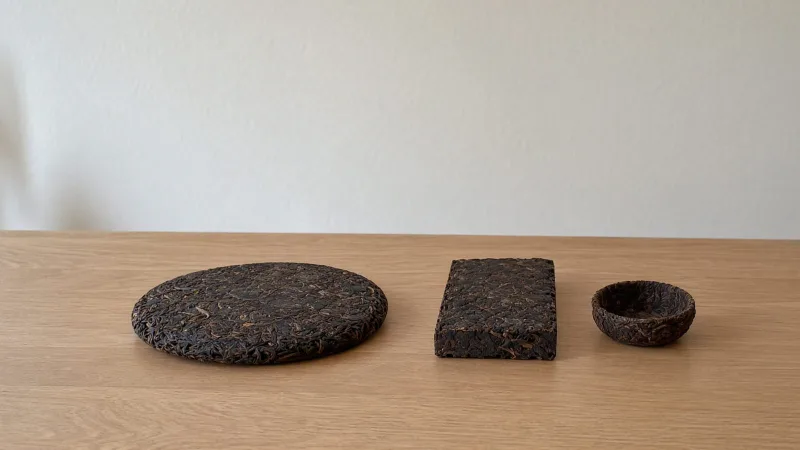
- cakes, bricks, tiles, baskets
- Liquor color:
- dark orange to red-brown
- Flavor:
- earthy, woody, sweetish
The color and flavor of green tea, oolong or black tea come from enzymes in the leaf itself. In dark tea, microorganisms do the work: molds, yeasts and bacteria. That makes "fermentation" the right word for this type alone. The Chinese name is 黑茶, hei cha, "black tea", after the color of the dry leaf. English calls it dark tea because in the West "black tea" already means what China calls hong cha, red tea, named for its liquor (see black tea).
Wet piling
Processing begins much as it does for green tea, with fixation and rolling. Next comes the key step, wo duiwo duiWet piling: moistened leaf is heaped and covered. The pile heats up, and fungi and bacteria change the color and flavor of the tea. (渥堆). Workers moisten the leaf, heap it into a pile and cover it. The pile heats up from within as microorganisms multiply, and the leaf darkens and loses its bitterness. In Hunan the pile sits for a few hours; ripe pu-erh in Yunnan spends 40–60 days in it and gets turned now and then.
Fermentation continues after pressing, only more slowly. This post-fermentationpost-fermentationSlow fermentation of finished tea that goes on for years in storage. goes on for years, and it is why dark tea gets aged.
Pu-erh and others
The best-known dark tea is pu-erh from Yunnan. Ripe (shu) pu-erh goes through wet piling at the factory. Raw (sheng) pu-erh is pressed from sun-dried leaf and then aged; young sheng tastes closer to green tea, and in China people still argue over whether it counts as dark tea at all.
Other provinces make dark teas of their own:
- Hunan, Anhua county: fu zhuan (茯砖) bricks with "golden flowers" (金花) inside; the leaf is dried over pinewood fires, and the liquor carries a hint of smoke;
- Guangxi: Liu Bao (六堡茶), packed in bamboo baskets;
- Sichuan, Ya'an: brick tea, carried to Tibet for centuries.
Pressing and storage
For centuries dark tea traveled by caravan to Tibet and Mongolia. Pressed leaf takes up less room and crumbles less on the road, hence cakes, bricks and tiles. At home, keep it at room temperature in a dark place, moderately humid but never damp (up to 70 % humidity), away from the kitchen and spices: the leaf absorbs odors. Storing tea goes into humidity and packaging in more detail.
The "golden flowers" in a fu zhuan brick are yellow colonies of the fungus Eurotium cristatum, and they are grown on purpose. A fluffy white or green coating on dark tea is mold from damp storage; throw that tea out.
How to brew
Dark tea needs water at a full boil. Take a dense cake apart with a pu-erh knife, trying not to crumble the leaf. Pour off the first short infusion, a rinse that softens the pressed leaf. Then brew in short infusions, gongfu cha style, in a Yixing teapot or a gaiwan, decanting each one into a fair cup so the tea does not oversteep.
-
 Pu-erh
普洱茶
Pu-erh, the pressed tea of Yunnan: sheng and shu, wo dui, the 357 g cake, aging and the myths about age, home storage, brewing in a gaiwan or Yixing pot.
-
 Liu Bao
六堡茶
Liu Bao, the dark tea of Cangwu county in Guangxi: overnight piling, bamboo baskets, cave aging, betel nut aroma, the route to Malaysia and brewing.
-
 Anhua
安化黑茶
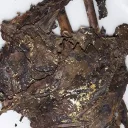
Anhua dark tea from Hunan: drying over pine fires, fu zhuan bricks with golden flowers, the 36 kg qian liang cha log, tian jian, and how to brew it.