Water and extraction
The same leaf brews a different cup depending on the water, its temperature and what goes in afterward. Labs have measured the physics and chemistry behind each change.
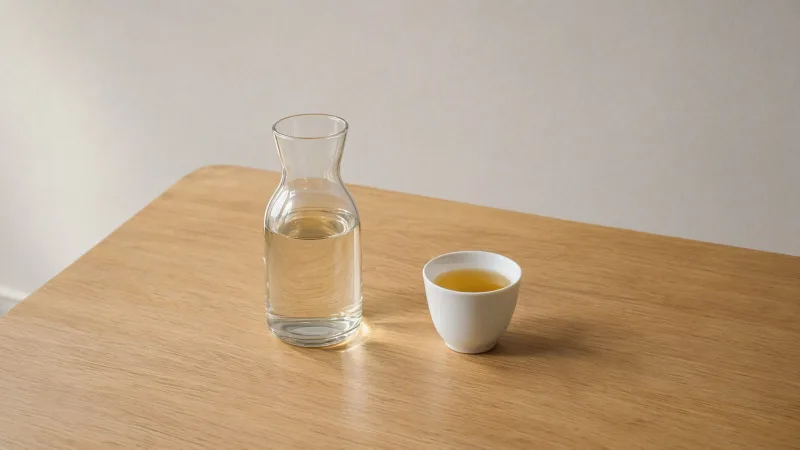
Tea does not dissolve the way sugar does. Compounds leave the swollen leaf slowly, held back by the path through the leaf itself rather than by the water around it, so extraction depends most on water temperature. Amino acids, theanine among them, come out fastest and galloylated catechins slowest, which is why several short infusions draw out more than one long steep. ISO 3103 sets 3–6 minutes at 2 g per 100 ml.
What happens next depends on what is in the water. The key factors in water chemistry are calcium and magnesium, bicarbonate and chlorine. Scum forms on the liquor when the water has both calcium and bicarbonate; boiling removes temporary hardness but leaves chloramine behind. In Chinese trials with 34 different waters, the best tea came from water low in minerals, hardness and alkalinity, and green tea reacted to the water most strongly.
Additives each work their own way. Milk caseins bind catechins and soften astringency, citric acid from lemon shifts the pH and lightens the color, and sugar makes astringency seem 30–40% weaker while the chemistry in the cup stays the same.
-
 Extraction
浸出
How flavor moves from leaf to water: diffusion, swelling, how temperature and leaf size matter, and why short infusions yield more than one long steep.
-
 Water chemistry
What water does to tea: calcium and magnesium, bicarbonate and pH, scum on the liquor, chlorine and chloramine, and what boiling and filters remove.
-
 Additives
What happens in the cup when tea meets milk, lemon, sugar or salt: polyphenol binding, color shifts, suppressed bitterness, and what remains disputed.