Tea traditions of Japan and Korea 茶の湯
Japan kept the whisked powdered tea of Song China and built the chanoyu ceremony on it. Koreans drink green leaf tea, and the darye rite took its present form in the 20th century.
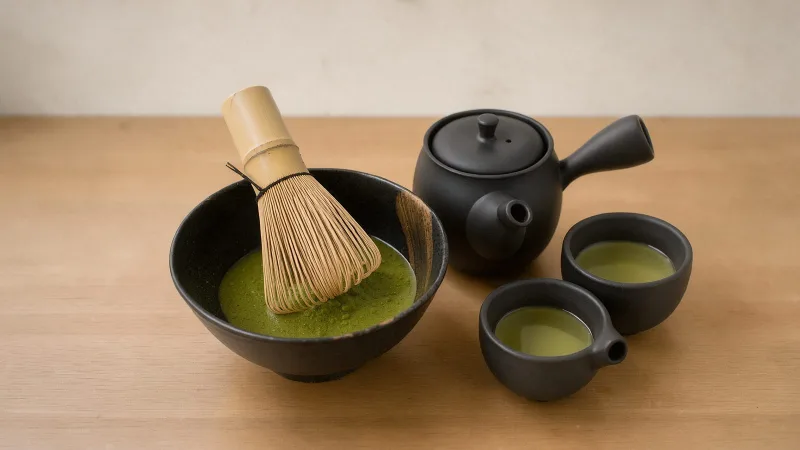
In China powdered tea gave way to leaf under the Ming, but in Japan it survived and became the basis of chanoyu. The host makes two teas from matcha, thick koicha and thin usucha, and serves them to guests in a chawan bowl.
Leaf tea has its own ceremony in Japan too. In 1654 Chinese monks brought over the practice of steeping leaf tea in a small pot, and senchado grew out of it. In a few places from Toyama to Okinawa, furicha still survives: people boil coarse tea, beat it with a large bamboo whisk, and sometimes eat the foam with rice and beans.
Tea has been known in Korea since the 7th century, but today's darye took shape between the 1960s and 1980s. It uses green leaf tea, brewed in a pot after the water has cooled in a separate bowl.
-
 Chanoyu
茶の湯
Chanoyu, the Japanese tea ceremony: from Eisai and Song China to Sen no Rikyu, the Sen schools, chaji and chakai, the tea room, garden and utensils.
-
 Senchadō
煎茶道
Senchadō, the Japanese way of leaf tea: Ōbaku monks and Ingen, Baisao, the Kagetsuan and Ogawa schools, utensils, and how sencha and gyokuro are served.
-
 Furicha
振り茶
Japan's folk whisked teas: batabata-cha, buku-buku-cha, bote-bote-cha. What goes in the bowl, how it is whisked, and why salt, beans and rice help it foam.
-
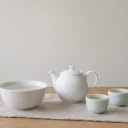 Darye
茶禮
Darye, Korean tea etiquette: Goryeo court tea, Joseon temples, the monk Choui, the 20th-century revival, brewing order, ujeon, sejak, Hadong and Boseong.