Teaware material and firing
Preheating and the mass of the wall matter more to the cup than the kind of clay. Color and density are settled in the kiln.

Teaware comes wrapped in legend, and labs in Taiwan, Japan and mainland China have put much of it to the test. They measured the material itself: zisha clay has 8–13% porosity compared with 2.4–2.6% for porcelain, while porcelain conducts heat only slightly better. Sencha brewed in iron-rich clay came out about a fifth lower in tannins than sencha brewed in porcelain, with no difference in amino acids. Preheating matters most: in a cold 100 ml vessel, the water cools by about 20 °C within a minute. The "breathing" wall and the teapot's "memory" rest on interpretation, not measurement.
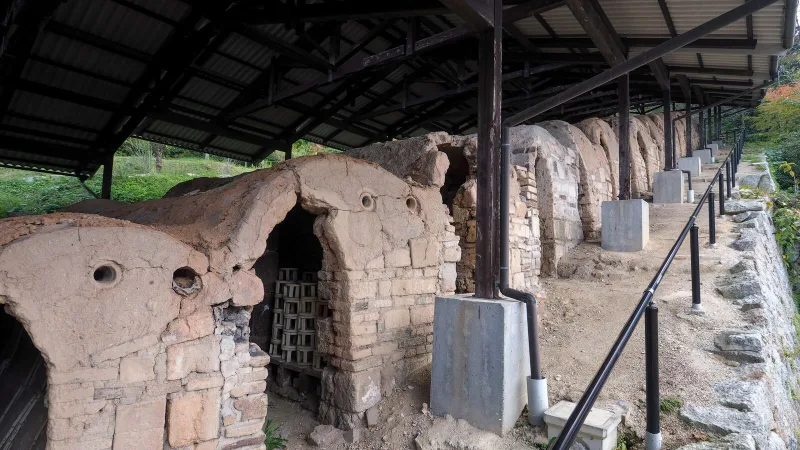
Body density, and with it porosity, is set during firing. When the kiln is starved of oxygen (CO at 4% and up), iron in the raw material turns the glaze celadon blue-green and the body gray; with oxygen to spare, the tones go yellow and brown. Zisha is fired at 1100–1200 °C; porcelain goes to around 1300 °C and comes out absorbing only about 0.5% water. Wood firing is prized for its ash and unpredictability, but there is no solid evidence that it changes how tea tastes.
-
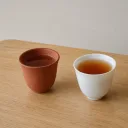 Teaware materials
How clay, porcelain, glass and metal change the brew: porosity, water absorption, heat capacity and vitrification. What tests confirm and what stays myth.
-
 Kilns and firing
How the kiln sets the color and density of teaware: oxidation and reduction, wood, gas and electric firing, and yaobian. What it means for your cup.