Tea in the Middle East and Central Asia
From the Maghreb to Mongolia people drink a lot of tea and take their time over it, but each place makes it differently: held over steam, diluted in the glass, poured into a bowl or simmered in a cauldron.
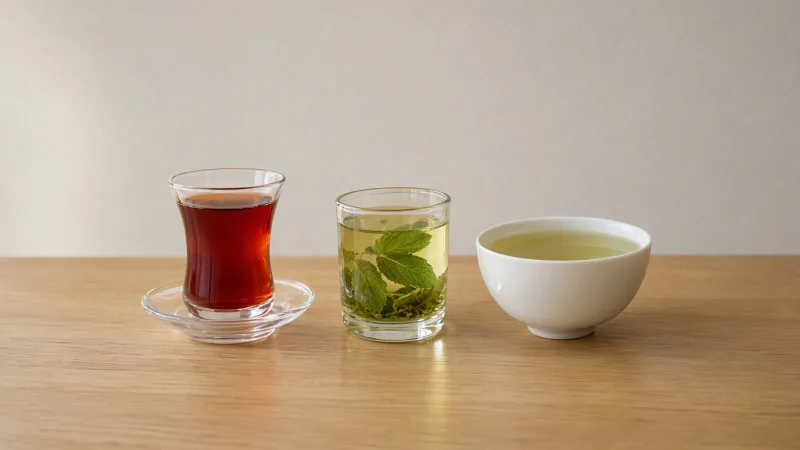
Turkey and Azerbaijan drink black tea they grow themselves; Turkey has grown it around Rize since 1938. A strong concentrate from the upper pot of the çaydanlık is topped up with boiling water right in the glass, an ince belli that holds about 125 ml. In Iran the tea steeps in a guri set on a ketri or samovar, and people sip it through a lump of sugar held in the mouth. Afghans add cardamom. Arab countries grow almost no tea yet drink it by the ton: Egypt went through 86,104 t in 2022, nearly all of it drunk strong, sweet and black from a small glass. In the Maghreb the tea is atai, Chinese gunpowder green with mint, poured from a height to raise a foam, and the custom is at least three glasses.
In Central Asia the tea is green. In the chaikhanas of Uzbekistan, Tajikistan and Turkmenistan the brew goes from pot to piala and back three times, and a guest gets a bowl a third or half full. On the steppe Mongols, Buryats and Kalmyks boil their tea instead of steeping it: brick tea, milk, salt and butter simmer together in a cauldron for about 15 minutes.
-
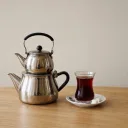 Turkey and Azerbaijan
Turkish and Azerbaijani tea: the stacked çaydanlık teapot, ince belli and armudu glasses, Rize black tea, tea stands, jam, and lump sugar for biting.
-
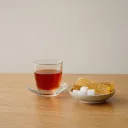 Iran and Afghanistan
The guri on a samovar, estekan glass and saucer, sugar held in the mouth, Gilan tea, the coffeehouse and Afghan cardamom tea.
-
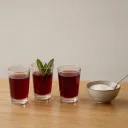 Arab world
Tea in the Arab world: Egyptian koshary and sa'idi, the Iraqi istikan and qouri, Gulf karak, sage and mint in the Levant, and the tea ladies of Sudan.
-
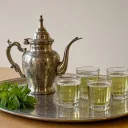 Atai
Atai is the mint tea of the Maghreb and the Sahara: Chinese gunpowder green, fresh mint, plenty of sugar, a high pour for foam, three glasses and a berrad.
-
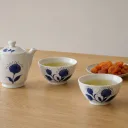 Chaikhana and piala
Central Asian tea: green kok-choy, qaytarish pour-backs, the half-filled piala, the chaikhana, shir-choy of the Pamirs and Soviet pakhtagul porcelain.
-
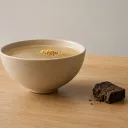 Steppe tea
Milk tea of the Mongols, Buryats and Kalmyks: brick tea boiled in a cauldron with milk, salt and butter. Customs, vessels, Kazakh and Tatar tea, fluoride.