Teaware of Japan and Korea 茶器
In Japan, the tea decides the vessel. Loose green tea is brewed in small teapots of iron-rich clay, and matcha is whisked in a wide bowl.
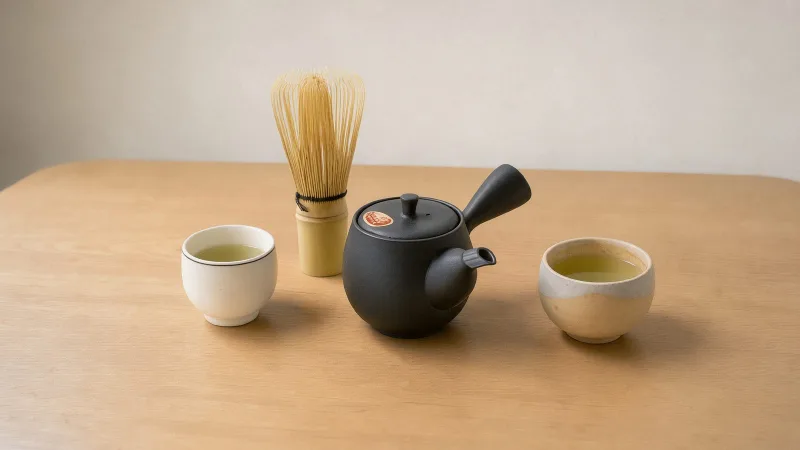
The Japanese kyusu usually has its handle on the side, at a right angle to the spout, with a strainer inside. The main centers for these teapots are Tokoname in Aichi Prefecture and Banko in Mie Prefecture, and potters in both towns use unglazed, iron-rich clay. Matcha is made in a bowl, not a pot: the host whisks the tea in a chawan, and the guest drinks from it. Chanoyu also has its own utensils: the chasen whisk, chashaku scoop, natsume caddy and kama kettle.
In Korea, people drink loose green tea. A Korean set centers on the dagwan teapot and the sukwu bowl for cooling the water, with cups of celadon, buncheong or white porcelain.
-
 Kyusu, houhin and shiboridashi
急須
Japanese kyusu, houhin and shiboridashi: handle types, strainers, capacity, the yuzamashi for gyokuro, and how to choose, hold and care for them.
-
 Tokoname and Banko
常滑焼・萬古焼
Tokoname and Banko, the two centers of Japanese kyusu teapots: red shudei, purple shidei, unglazed firing, history, makers, marks and the Yixing link.
-
 Chawan
茶碗
Chawan, the Japanese matcha bowl: parts, shapes by season, Raku, Hagi and Karatsu kilns, how to choose one, how to drink from it and dry it against mold.
-
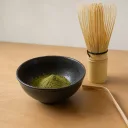 Chanoyu utensils
茶道具
Chanoyu utensils besides the bowl: chasen whisk, chashaku scoop, natsume and chaire caddies, kama kettle and mizusashi. Materials and seasonal changes.
-
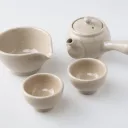 Korean teaware
茶具
Korean teaware: the dagwan teapot and sukwu cooling bowl, four handle types, Goryeo celadon, buncheong, Joseon white porcelain and Korean bowls in Japan.