Tea traditions of China 中国
Tea drinking in China goes back more than twelve centuries. Some of its customs survive only in old treatises. Others you can still see in any Chaozhou tea shop or Chengdu teahouse.
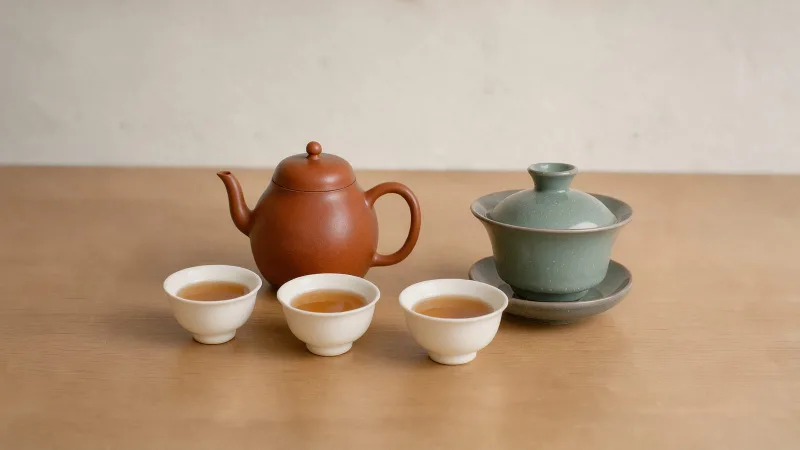
The history of Chinese tea is a story of three methods, each replacing the last. Under the Tang, people ground pressed tea and boiled it with salt in a cauldron, as Lu Yu describes. Song drinkers whisked powdered tea in a bowl to a thick froth. After the decree of 1391, the leaf was steeped in a teapot, and later in a gaiwan too. Through all of it ran an argument about water and the boil: which source to draw from and when the water is ready.
The living traditions are how China drinks tea today. In Taiwan, Chaozhou gongfu, with its three cups and charcoal stove, grew into chayi, which uses a fair cup and an aroma cup. Alongside it came chaxi, the art of setting the tea table. People go to a teahouse less for the tea than for the place: the Cantonese for yum cha snacks, Chengdu for conversation, Beijing for a cheap "big bowl". The peoples of Yunnan roast the leaf in a pot by the fire pit, and the Hakka grind lei cha with sesame and peanuts in a mortar.
-
 History
How China's way of drinking tea changed: Lu Yu's boiled tea under the Tang, whisked Song diancha, the Ming shift to steeped leaf, and old writers on water.
Tang boiled tea: Lu Yu and The Classic of Tea · Song whisked tea: diancha and doucha · Ming and Qing: the shift to steeped leaf · Water and boiling in the tea classics
-
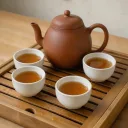 Living traditions
How China drinks tea today: Chaozhou gongfu, Taiwanese chayi and chaxi, teahouses in Canton, Chengdu and Beijing, Yunnan roasted tea and Hakka lei cha.
Chaozhou gongfu cha · Taiwanese tea arts: chayi and wuwo · Chaxi: the art of the tea table · Chinese teahouses: yum cha, Sichuan and Beijing · Tea customs of Yunnan's peoples · Lei cha and you cha: pounded and oil teas