Brewing vessels
Everything on the table between the dry leaf and your lips: the brewing vessel, a fair cup for the decanted liquor, small cups, and a tray with a basin underneath.
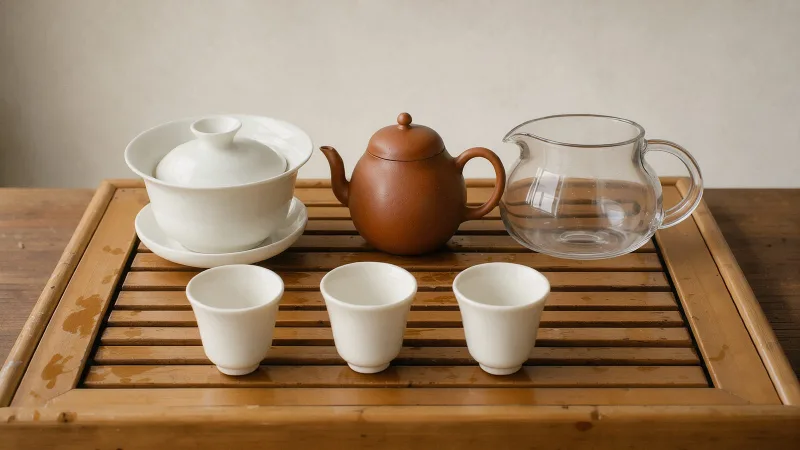
In gongfu cha every infusion takes the same route: from the brewing vessel into the fair cup, then into the cups, while the water used to warm the teaware drains into a basin. The vessel is most often a gaiwan, a porcelain bowl with a lid and saucer, usually 100–150 ml. It is traced to the Kangxi reign (1662–1722), became the standard gongfu vessel in the 1970s and 1980s, and suits any type of tea. A Yixing teapot is shaped from unglazed zisha clay, as it has been since the 16th century, and each pot is kept for one type, usually oolong, black or dark tea.
How a pot pours depends on its anatomy: a spout that runs straight or with up to three bends, the filter, the hole in the lid. Chaozhou gongfu calls for pots of 90–150 ml. The whole infusion goes into a fair cup of 150–300 ml, which stops the leaf from steeping. This vessel joined the set in Taiwan in the 1970s and 1980s and has no place in classic Chaozhou practice. Cups hold 30–50 ml, two or three sips, and everything stands on a tea tray, a slatted top over a basin made of bamboo, wood or stone.
-
 Gaiwan
盖碗
A gaiwan is a lidded bowl with a saucer for loose-leaf tea. History, parts, size, grips, teas to brew in it, what to check when buying, how to avoid burns.
-
 Yixing teapot
宜兴紫砂壶
The Yixing teapot of zisha clay: how porous walls change the liquor, why each pot is kept for one type of tea, how to care for it and how to spot a fake.
Yixing clays: zini, zhuni, duanni · How a Yixing teapot is made: shaping, marks, classic shapes · History of Yixing teapots and their masters
-
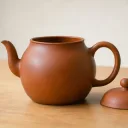 Teapot anatomy
茶壶结构
What a brewing teapot is made of and what each part does: spout, filter, vented lid, handle, size. How to test the pour and cut-off before you buy.
-
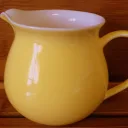 Fair cup (chahai)
公道杯
A chahai, or fair cup, collects the whole infusion so every cup gets the same strength. Where it came from, what size and material to pick, how to use it.
-
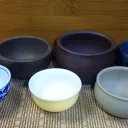 Cups
品茗杯
Tea cups for gongfu cha: 30–50 ml volume, rim and shape, porcelain, celadon and clay, the wen xiang bei aroma cup, stands and how to pick a cup.
-
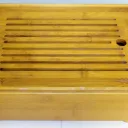 Tea tray (cha pan)
茶盘
A cha pan is a tea tray with a drip basin for gongfu cha. How it differs from a tea boat and pot stand, drawer or hose drain, materials and care.