Black tea 红茶
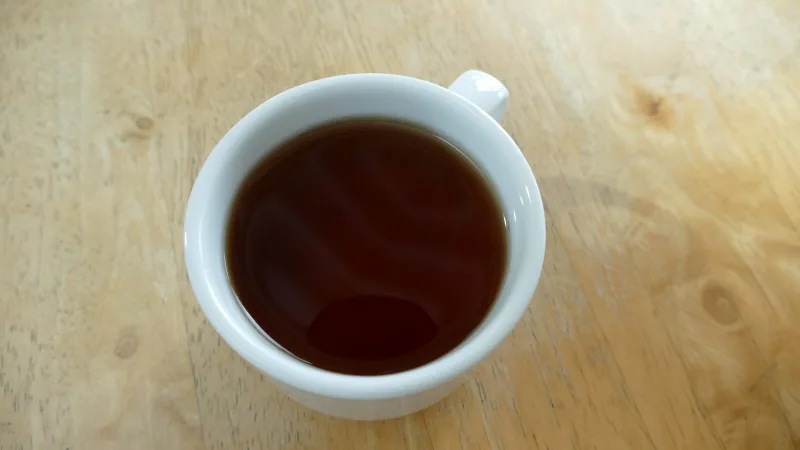
Fully oxidized tea. The Chinese named it for the color of the liquor, Europeans for the color of the dry leaf, which is why the West calls it black.

- Oxidation:
- full
- Key step:
- rolling and oxidation without fixation
- Main provinces:
- Fujian, Yunnan, Anhui
- Liquor color:
- red-copper
- Flavor:
- sweet, honeyed, with dried fruit and cocoa
- Birthplace:
- Wuyi Mountains, late Ming dynasty
Black tea is oxidized all the way. Makers wither the leaf, roll it and leave it somewhere warm and humid until it turns copper-brown, then dry it. With no fixation step, the enzymes keep working until the leaf is dry. The liquor is red-copper, and the flavor is sweet and full, with notes of honey.
Why the West calls it black
In China the type takes its name from the color of the liquor: 红茶, hong cha, "red tea". European merchants looked at the dry leaf, dark and almost black, and so it became black tea in English and most European languages. The mix-up goes further. In China "black tea" (黑茶, hei cha) means a different type, dark tea, which includes pu-erh. This site uses the familiar Western name, black tea, and calls hei cha dark tea, so the two types never share a word.
Where it came from
The generally accepted account places the first black tea at the end of the Ming dynasty, in the village of Tongmu in the Wuyi Mountains, in northern Fujian. The tea was Zheng Shan Xiao Zhong (正山小种), known in the West as Lapsang Souchong. The classic version is dried over pine-wood smoke. The same mountains are home to the rock oolongs.
Other provinces took up the technique. Qimen (祁门, Keemun) appeared in Anhui in the 1870s, and Yunnan began making Dian Hong in the late 1930s.
Three groups
Chinese tea technologists divide black tea into three groups by how it is made. The oldest is xiao zhongxiao zhong小种, "small variety": the oldest group of black tea, from the Wuyi Mountains. The classic version is dried over pine-wood smoke. from Wuyi. Whole leaf, carefully and tightly rolled, is called gongfu hong chagongfu hong cha工夫红茶, "black tea of fine work": whole, tightly rolled leaf. (工夫红茶); Qimen and Dian Hong belong here. Broken tea (红碎茶) is machine-cut. It brews fast and strong and ends up in tea bags.
How to brew
Black tea wants hot water, 90–95 °C. Brewed in short steeps in a gaiwan, it yields five to seven rich infusions; in a large teapot it gets a single steep of three to four minutes. Hard water leaves a film on the liquor and dulls the aroma, so brew with soft water.
4–5 g per 100 ml, water 90–95 °C (194–203 °F). Make the first infusions 10–15 seconds, then add 5–10 seconds each time. For bud teas, lower the temperature to 85–90 °C.
-
 Dian Hong
滇红
Dian Hong is a Yunnan black tea made since 1939 from a large-leaf variety: golden buds, a honeyed flavor. Its history, its styles and how to brew it.
-
 Qimen
祁门红茶
Qimen (Keemun) is a black tea from southern Anhui, made since 1875. Its floral, honeyed aroma, gongfu Qimen and Mao Feng, processing and brewing.
-
 Zheng Shan Xiao Zhong
正山小种
Zheng Shan Xiao Zhong (Lapsang Souchong), the first black tea, from Tongmu in the Wuyi Mountains: pine-smoked and unsmoked, its history and how to brew it.
-
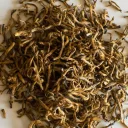 Jin Jun Mei
金骏眉
Jin Jun Mei is a black tea made only from buds, produced in Tongmu since 2005. How it appeared, where the name comes from, how to spot a fake, how to brew.