Chinese ceramics and porcelain 陶瓷
Yixing is the best-known pottery town in China for teaware, but not the only one. Each school has its own clay, its own way of shaping it and the tea its pots suit best.
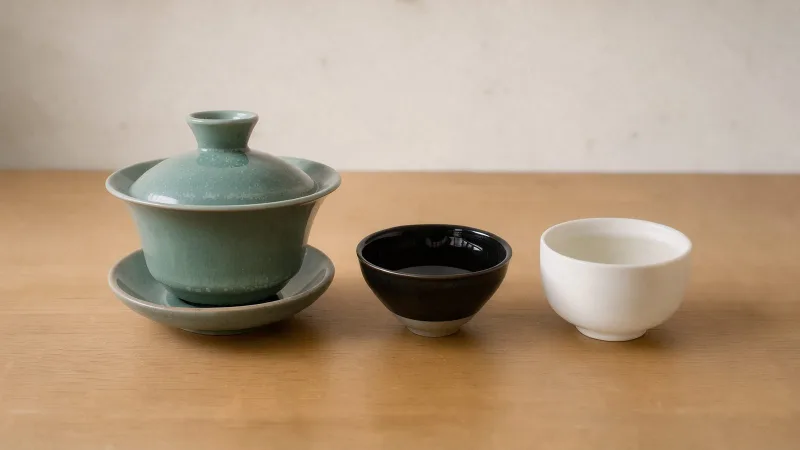
Chinese teaware comes in two broad families. Pottery (tao, 陶) is unglazed or lightly glazed clay with a porous body that holds heat and over time soaks up oils from the tea. Porcelain (ci, 瓷) is fired hotter, until the body vitrifies: dense, ringing and absorbing nothing.
Besides Yixing in Jiangsu province, potters make teapots and cups from local clay in Chaozhou (Guangdong), Jianshui (Yunnan), Qinzhou (Guangxi) and Rongchang (Chongqing).
The Yue kilns were already firing mature celadon under the Eastern Han. Under the Song, the Ru, Guan, Ge and Jun kilns became famous, and potters made black Jian bowls for whisked tea. Jingdezhen in Jiangxi and Dehua in Fujian remain the main porcelain centers today.
-
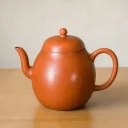 Shoula teapot
潮州手拉朱泥壶
The Chaozhou shoula teapot of red zhuni clay, thrown on the wheel: how it differs from Yixing, which teas suit it, and how to tell it from a cast pot.
-
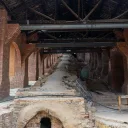 Jianshui pottery
建水紫陶
Jianshui zitao: unglazed Yunnan pottery made from five local clays, carved and inlaid with colored clay. How it differs from Yixing and which teas suit it.
-
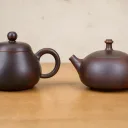 Nixing
坭兴陶
Nixing from Qinzhou: unglazed Guangxi pottery from two local clays, kiln transformation, teapots for Liu Bao and dark teas, care, buying and fakes.
-
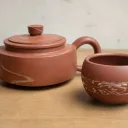 Rongchang and others
荣昌陶
Rongchang pottery, made from the red and white clays of Chongqing, plus the ware of Pingding, Tongguan, Shiwan and Zibo and the rock-ore teapots of Taiwan.
-
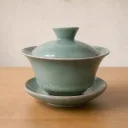 Yue and Longquan celadons
青瓷
Yue and Longquan celadon: green glaze, reduction firing, the secret-color mise ware, Lu Yu’s bowls and Song tea. How to pick a cup and read crackle.
-
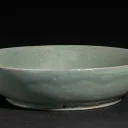 Song kilns
宋代名窑
The Song kilns Ru, Guan, Ge and Jun: what made them famous, where crackle comes from, how modern "Ru ware" cups are made and how to tell good ones apart.
-
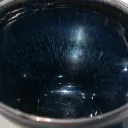 Jian zhan
建盏
Jian zhan, black bowls of Song-era Fujian: hare's fur, oil spots, yohen, tenmoku. Where the patterns come from, how to warm a bowl and how to spot fakes.
-
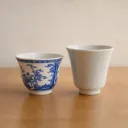 Jingdezhen porcelain
景德镇瓷器
Jingdezhen porcelain for tea: the binary body, qingbai, cobalt, doucai and fencai. Which gaiwans and cups the city makes today and how to choose one.
-
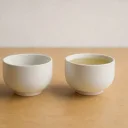 Dehua white porcelain
德化白瓷
Dehua blanc de Chine, the Xing and Ding kilns, Liling: how they differ, why white shows the liquor, and how to pick a Dehua gaiwan without buying glass.