Living traditions of China
This is how China still drinks tea: at a low table in a shop, in a noisy teahouse, by the fire pit in a mountain house, and sometimes with a spoon, like soup.
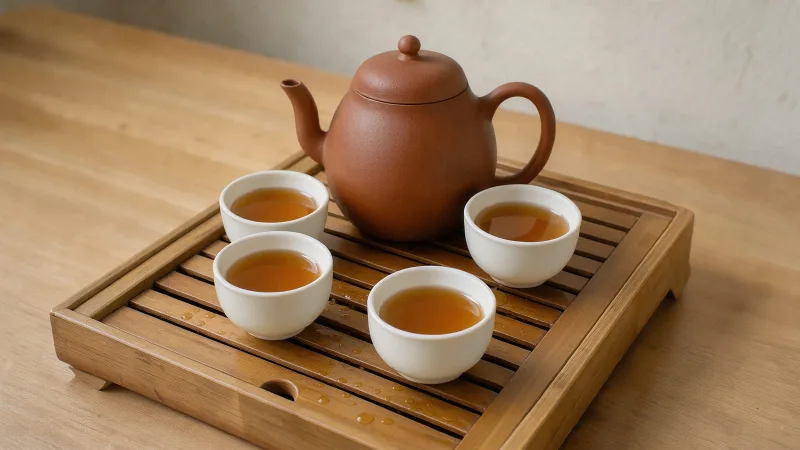
The most intimate of these customs is Chaozhou gongfu: a tiny pot, three cups holding 25 to 35 ml each and a charcoal stove. First described in 1801, it has been on a UNESCO list since 2022. After 1971 it grew in Taiwan into the chayi movement, which added the fair cup and the aroma cup to the set, introduced an exam for brewing masters, and in 1990 held the first wuwo gathering, where there is neither host nor guest. Modern chaxi took shape there too: a tea table arranged around one tea and one idea. In 2005 Qiao Musen counted nine elements in it.
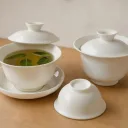
People go to a teahouse for a seat and some company. In Canton tea comes with dim sum. In Sichuan boiling water is poured from a copper kettle with a spout up to a meter long, and in Beijing, from 1979 on, a bowl of "big bowl tea" cost 2 fen.
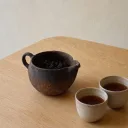
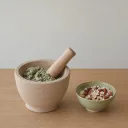
In the south and southwest, tea turns into food. The peoples of Yunnan roast the leaf in a clay pot by the fire pit and only then pour on boiling water, and the Bai of Dali serve it in three courses. The Hakka grind lei cha in a ridged mortar with sesame and peanuts, and the Yao and Dong of Guangxi pound you cha with ginger in a cast-iron pot.
-
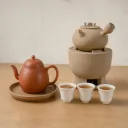 Chaozhou gongfu
潮州工夫茶
The four treasures, the 21 forms of the 2019 standard, UNESCO listing and everyday tea in Chaoshan, from the first account in 1801.
-
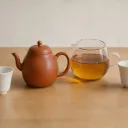 Taiwan: chayi and wuwo
茶藝
Chayi in Taiwan: how the fair cup, the aroma cup and the brewing-master exam grew out of Chaozhou gongfu after 1971, and how a silent wuwo gathering works.
-
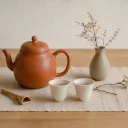 Chaxi
茶席
Chaxi is a tea setting with intent: Qiao Musen’s nine elements, its history from the Song, the Taiwanese school and table sizes in standard T/CTSS 3.
-
 Teahouses
茶馆
Cantonese yum cha with dim sum, Sichuan teahouses with gaiwan and long spout, Beijing big-bowl tea, Hangzhou storytelling: how a Chinese teahouse works.
-
 Yunnan
Bai three-course tea, roasted pot tea, Lisu thunder tea, Dai bamboo tea and Jino tea salad: how the peoples of Yunnan drink tea and how the customs differ.
-
 Lei cha and you cha
擂茶
Hakka lei cha and Yao and Dong you cha: tea pounded in a ridged mortar or beaten in a cast-iron pot with ginger, sesame and peanuts. Tools, recipes, myths.