Tea science 茶学
The bitterness, astringency, sweetness and aroma of the liquor depend on compounds in the leaf, on the water and on the teaware. Most of this has been measured, and the numbers explain why people brew tea the way they do.
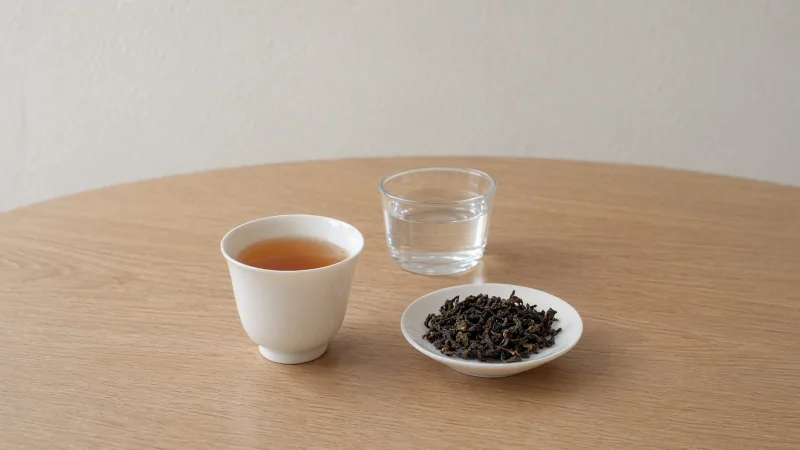
Brewing advice rests on leaf chemistry. Boiling water extracts caffeine and catechins faster, which is why it makes green tea bitter, while a long infusion draws out the compounds that leave the leaf slowly. How much of what ends up in the cup comes down to temperature, time and the water. Calcium, bicarbonate and chlorine change the color and aroma of the liquor, and milk, lemon and sugar each soften astringency in a different way.
To compare teas, professionals brew them to a standard and describe them with a fixed vocabulary. In China, evaluation and tasting follow the shenping method under GB/T 23776; in the West, ISO 3103. Teaware changes the liquor too, if less than the legends claim. Tests on material and firing show that preheating counts for more than the type of clay, and that the kiln sets the glaze color and the density of the body. Lead and cadmium in glazes and overglaze decoration are a matter of teaware safety, covered in the teaware section.
-
 Chemistry
Caffeine, catechins, theanine and aroma compounds in tea leaf: how much dry tea holds, what reaches the cup, and which tea risks have been measured.
Caffeine in tea and in the cup · Polyphenols: catechins, theaflavins, astringency · Theanine, amino acids and umami · The chemistry of tea aroma · Is tea safe? What is in the cup
-
 Water and extraction
How flavor moves from leaf to water, what calcium, bicarbonate and chlorine do to the liquor, and what happens when milk, lemon or sugar goes into the cup.
How the Leaf Gives Up Flavor: The Physics of Extraction · The Chemistry of Water for Tea: Hardness, Alkalinity, Chlorine · Milk, Lemon, Sugar: What Additives Do to Tea
-
 Evaluation
How professionals judge tea: shenping under GB/T 23776-2018, cupping by ISO 3103, the GB/T 14487 and ISO 6078 vocabularies. Weights, times, cups, terms.
Shenping: Professional Tea Evaluation in China · Tea Tasting: ISO 3103 and Professional Cupping · The Language of Taste: How to Describe Tea
-
 Material and firing
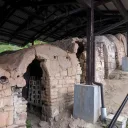
How clay, porcelain, glass and metal change tea, and how the kiln sets the color and density of the body: porosity, preheating, reduction, wood firing.
What Teaware Is Made Of: Porosity, Heat and Vitrification · Kilns and Firing: Reduction, Wood and Kiln Change