Teaware of Europe and Russia
Europe first bought its teapots from China and Japan, then learned to make its own. Russia contributed the samovar, and Britain a tea table set with a hot-water jug, a caddy and a strainer.
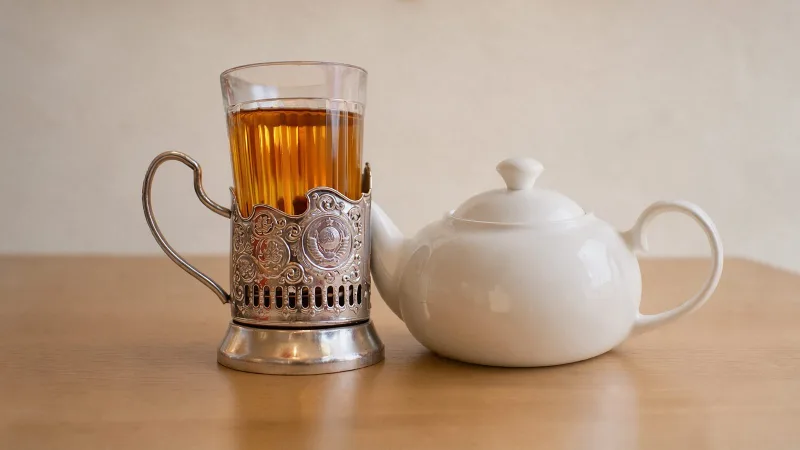
Europe's first teapots were imported. Dutch and English ships brought them in with the tea: Jingdezhen porcelain and red Yixing teapots. Around 1678–1680 potters in Delft began copying them, followed by Staffordshire and Saxony. Russians heated their tea water in a samovar; the earliest known record of one dates from 1740.
In this section
-
 The samovar
 explained: how charcoal and electric models work, what to burn, where Ural and Tula styles came from, and how to care for or vet an old one.
-
 European teapots
: Delft copies of Yixing, Meissen red stoneware and porcelain, Wedgwood creamware, Spode bone china and silver. Shapes, materials, care.
-
 British tea table
The British tea table: the red-clay Brown Betty teapot, hot-water urn, caddy, strainer, slop basin and cosy. What each piece does and how to brew with it.