History of Chinese tea
Long before gongfu cha, Chinese drinkers boiled tea with salt in the 8th century, whisked it to a froth in the 11th and 12th, and only began steeping the leaf after 1391.
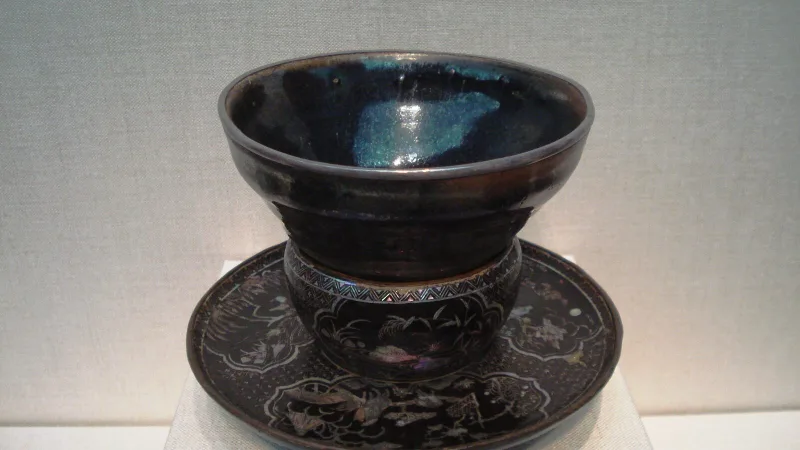

Under the Tang, people toasted a cake of pressed tea over a fire, ground it to powder and dropped it into a cauldron of boiling salted water. Lu Yu set the method down in The Classic of Tea around 760, and the silver set sealed in Famen Temple in 874 shows what the utensils looked like. Song diancha started from the same cake, but the powder was worked into a paste right in a dark bowl, then hot water was added a little at a time and whisked into a thick white froth. In doucha contests, the whitest and longest-lasting foam won.
The 1391 decree ended both. Zhu Yuanzhang ordered an end to dragon cakes for the court, and two centuries later Xu Cishu and Zhang Yuan were writing about the teapot, rinsing the leaf and counting infusions. The Qing added the gaiwan and court porcelain.
One argument runs through every era: water and the boil. From the 8th to the 18th century, writers debated which source to draw from and how to tell when the water was ready. Lu Yu ranked mountain water above river and well water, Zhang Youxin's famous list of springs turned out to be a legend, and Qianlong weighed water with a silver vessel to find the lightest.
-
 Tang boiled tea
煎茶
How tea was boiled under the Tang: cake, roller, salted cauldron, Lu Yu's three boils, the 24 utensils of The Classic of Tea and the Famen Temple silver.
-
 Song diancha
点茶
How the Song drank tea: cake powder ground to a paste, whisked to froth in a bowl and judged in contests for the whitest, longest-lasting foam.
-
 Ming and Qing
明清
The 1391 decree, the treatises of Xu Cishu and Zhang Yuan, early teapots and the gaiwan: how Ming and Qing China moved from whisked powder to steeped leaf.
-
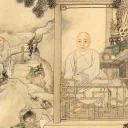 Water and boiling
品水
Which water Chinese tea writers chose and how they judged the boil: Lu Yu, Zhang Youxin's spring ranking, Qianlong's silver vessel, Japan's pine wind.